

Buckwheat. At first glance, its name can be misleading, as it is immediately associated with the grass family; in reality, however, it is not a true cereal, but a pseudo-cereal belonging to the Polygonaceae family.
At first glance, its shape seems more suited to ornamental purposes than to food production.
In fact, the flowers Buckwheat grains are colourful and clearly visible, unlike those of grasses, which appear very small to the naked eye, and its seeds are characterised by their typical shape pyramidal.
Of very ancient origin, buckwheat was mainly grown in Siberia, Manchuria and China. Given that the regions where this pseudo-cereal originated were inhabited mainly by people of the Muslim faith, buckwheat was referred to as the pagan grain, of the Saracens. And that is precisely where its name comes from.
Contents
- A pseudo-cereal with surprising nutritional properties
- Buckwheat bread: the secret to making it perfectly
- A versatile flour, suitable for a wide range of culinary uses
A pseudo-cereal with surprising nutritional properties
A real “superfood“. That is how this pseudo-cereal is described, characterised by a great many nutritional properties capable of bringing significant health benefits:
- It is extremely rich in proteins high quality;
- It is a source of essential amino acids, which are essential for the health of our bodies;
- It is high in fibres;
- Contains minerals such as: iron, magnesium, potassium, selenium, zinc and copper;
- Contains vitamins in Group B;
- It has a low glycaemic index;
- In this pseudo-cereal, you can find the routine, an antioxidant that helps to reduce capillary fragility and vascular permeability, thereby protecting against the risk of oedema.
Furthermore, buckwheat is typically ground as a whole grain, which is certainly another point in its favour, as this ensures that its nutrients remain intact.
Buckwheat bread: the secret to making it perfectly
As well as its appearance, which differs from that of traditional cereals, buckwheat is distinguished from them by its complete gluten-free.
Whilst this characteristic is a fundamental aspect of the diet for people with coeliac disease, it does not, however, allow for satisfactory bread-making.
Bread made solely from buckwheat flour:
- does not ensure sufficient alveolarisation;
- it has a dense, moist crumb;
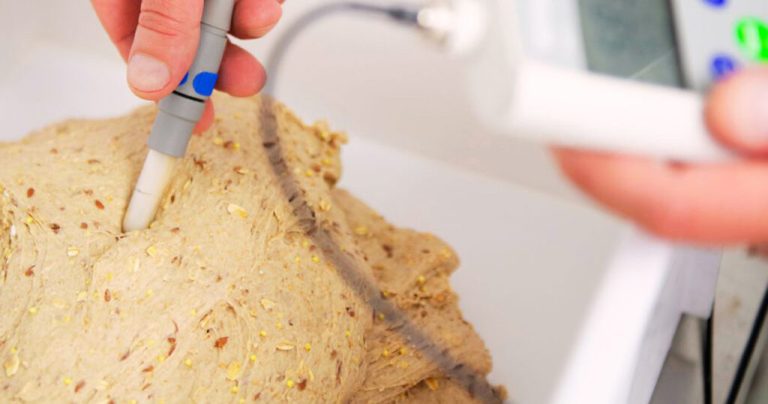
In fact, this pseudo-cereal has a very limited ability to trap the gases produced during fermentation and to make its starch available to the yeast, which has a negative impact on the volume and baking properties of the finished product.
For achieve a better result a delight for both the eyes and the palate; in fact, buckwheat flour is commonly mixed with wheat flour tender.

A versatile flour, suitable for a wide range of culinary uses
Buckwheat flour, as well as having impressive nutritional properties, is truly excellent in terms of flavour e sense of smell. Its aroma is reminiscent, on the one hand, of the sweet, buttery notes of hazelnuts and, on the other, of the earthy, slightly bitter notes resulting from the presence of numerous flavonoids.
Furthermore, as it is a flour very versatile, it can be used in a variety of dishes, both sweet and savoury.
In northern Italy, the flour made from this pseudo-cereal is mainly used as a staple in the traditional cuisine of Valtellina and of the Trentino. Indeed, we recall certain preparations, such as: the Taragna polenta, the Valtellina-style pizzoccheri, the sloppy and the famous Sweet buckwheat and blueberry cake.
For further information on semi-finished products made from pseudo-cereals, please contact us: info@promix.srl o +39.0871.84829